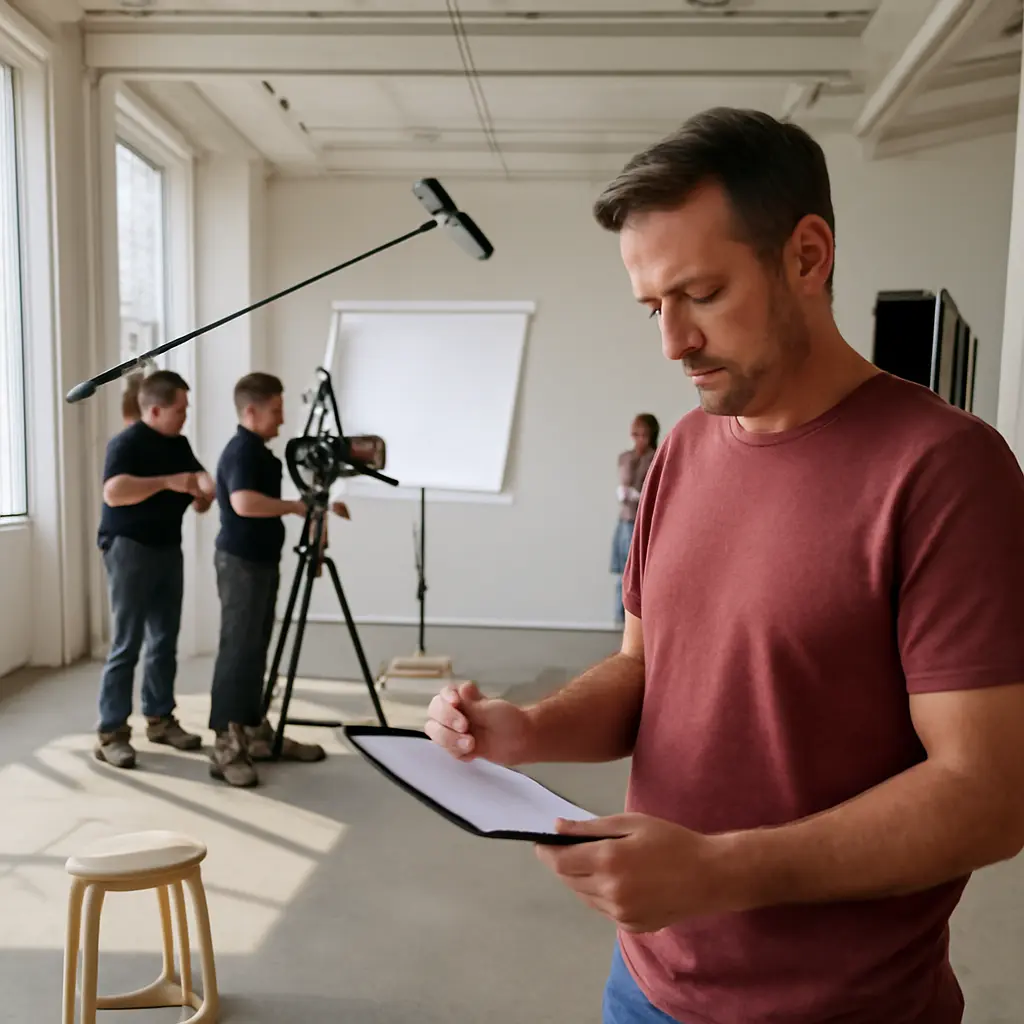
A television commercial shoot is the planned production of a short advertisement, but its brief finished runtime can hide a long, tightly scheduled workday. Beginners often underestimate the time because filming involves more than recording each scene: crews must prepare locations and equipment, light and reset shots, accommodate talent, and capture alternate takes. The Screen Actors Guild–American Federation of Television and Radio Artists (SAG-AFTRA) and the U.S. Department of Labor describe work rules and production roles that help explain why a shoot day is not simply a matter of filming the commercial’s final seconds. Understanding preproduction, on-set hours, and postproduction makes schedules and budgets more realistic.
Why commercial shoot time exceeds finished runtime
A commercial’s runtime is the length of the finished advertisement; shoot time is the time needed to prepare and record the material that may become that advertisement. The two measures are not interchangeable. A 30-second spot can require hours on set because those seconds may contain multiple camera setups, performances, product details, and lighting changes. The Association of Independent Commercial Producers (AICP) publishes production guidance and bidding materials that treat a commercial as a coordinated production—not merely a short recording session.
There is no universal number of hours for a commercial shoot. A controlled tabletop product spot, a dialogue scene with several actors, and a location shoot involving vehicles or stunts have different needs. The useful planning question is therefore not “How long is the ad?” but “How many setups, locations, and production changes must the crew complete?”
Shoot day, setup, and camera setup
A shoot day includes crew calls, equipment preparation, blocking, lighting, rehearsals, takes, resets, meal breaks, and wrap. A camera setup is a distinct arrangement of camera position, lens, framing, lighting, and sometimes set dressing. Changing from a wide shot to a close-up may require repositioning equipment and adjusting the scene, even if both shots feature the same performer.
The number of setups is a stronger schedule clue than the commercial’s runtime. Each change can consume time, and some require moving lights, rebuilding a product arrangement, or waiting for continuity details to be checked. A schedule with many visual variations can therefore take longer than a single, uninterrupted performance.
Crew coordination and work rules
Commercial production depends on specialized roles: the director guides performances and visuals, the director of photography shapes the image, and camera, lighting, grip, art, production, and sound teams carry out connected tasks. The U.S. Bureau of Labor Statistics’ Occupational Outlook Handbook describes film and video production as collaborative work involving distinct occupations. When one department needs a change, other departments may need to respond before filming resumes.
When performers or crew work under union agreements, applicable terms can also affect scheduling, breaks, overtime, and turnaround. SAG-AFTRA’s commercial contracts set conditions for covered performers; producers should confirm the current agreement and production circumstances rather than assume one schedule rule applies to every job.
How preproduction shapes commercial shoot duration
Preproduction is the planning stage before principal photography. It converts a creative brief into decisions about script, casting, locations, props, wardrobe, equipment, schedule, and budget. The AICP’s production resources and bid forms reflect how commercial projects organize costs and production requirements before the camera rolls. Strong preparation does not eliminate surprises, but it makes the planned work visible and helps teams decide what to do if time runs short.
Creative planning and shot lists
A storyboard or shot list breaks the commercial into specific images and actions. It can reveal that one short line of narration needs several product close-ups, a reaction shot, and a wide establishing image. Directors and producers can then group shots by location, cast, lighting, or equipment to reduce avoidable resets.
For example, a beverage advertisement might need a hero bottle, condensation details, a pour, and a group scene. Although the final edit may show each image briefly, the crew must prepare each version, check the product’s appearance, and capture usable takes. The list—not the final edit length—helps determine the day’s workload.
Casting, locations, and logistics
Casting and location decisions affect the schedule because people and places bring constraints. A location may have restricted access, limited parking, noise, weather exposure, or a fixed closing time. Talent availability, wardrobe changes, child-performer rules where applicable, and travel between locations may also shape the day.
Preproduction planning should account for load-in and load-out as well as filming. A crew that must transport and rebuild equipment between locations loses time that a single-location plan may preserve. A weather backup or interior alternative can also prevent an outdoor schedule from collapsing when conditions change.
On-set factors that extend filming
Once production begins, the schedule is affected by the interaction of performance, technical work, and continuity. Production time is not always productive camera time: the camera may stop while the team adjusts a light, resets an object, checks focus, or prepares the next take. These pauses are ordinary parts of making footage that can be edited together consistently.
Lighting, blocking, and technical resets
Blocking is the planned movement and positioning of performers within a scene. It must work with camera framing, lighting, sound, set dressing, and safety requirements. A small change in actor position can alter shadows or focus, so a director’s adjustment may prompt several departments to refine the setup before another take.
Product work often adds precision requirements: labels need to face camera, packaging must remain clean, and repeated pours or food preparations must look consistent. These details are especially important in tabletop and beauty shots, where the product fills the frame and small visual differences are conspicuous.
Performance, retakes, and continuity
A take is one recorded attempt at a shot. Directors may request additional takes to improve delivery, timing, expression, movement, or technical quality. Continuity means maintaining consistent details across shots, such as hand position, wardrobe, product level, and the direction a performer looks. A mismatch can make otherwise strong footage difficult to edit together.
A schedule should also allow for practical disruptions such as a missed line, an equipment issue, background noise, or a change in creative direction. These possibilities do not mean every shoot will run late; they explain why an ambitious plan with no buffer is fragile.
Meals, overtime, and the cost of overruns
A shoot day must include required breaks and comply with applicable employment agreements and labor rules. The precise requirements vary by worker classification, jurisdiction, and contract. The U.S. Department of Labor’s guidance on hours worked and overtime explains federal rules for covered employees, while union agreements may establish additional terms for covered productions.
Running beyond the planned day can increase labor, equipment, location, and transportation costs. It may also affect the next day’s call time and crew rest. Producers can reduce this risk by prioritizing essential shots, scheduling complex setups early enough to address problems, and identifying optional material that can be dropped if time is limited.
Postproduction adds time after filming
Wrap does not mean the advertisement is finished. Postproduction includes reviewing footage, editing, sound work, color correction, graphics, music, legal checks, and client approvals. The Association of Independent Commercial Producers’ postproduction resources and production practices recognize these as distinct steps in delivering commercial work.
Editing, sound, graphics, and color
Editors assemble selected takes into versions that meet the brief and required runtimes. Sound teams may clean dialogue, add effects, and mix music, while colorists balance and refine the image. Graphics may include product claims, captions, logos, or required end cards. Each task depends on the materials and decisions that came before it.
A shoot may also capture alternate lines, product shots, or framing that can support different edits. Those options can be valuable, but they create more footage to review and do not guarantee that every variation will be used.
Approvals, revisions, and delivery versions
Clients, agencies, and other stakeholders may review cuts and request changes. Revisions can range from a small text correction to a new edit built around a different performance. Deliverables may also require multiple aspect ratios, durations, language versions, or platform specifications. Clear review rounds and an agreed approval process help keep this stage predictable.
A realistic production calendar separates filming from final delivery. If a commercial has a fixed media launch date, the team should reserve enough time for editing, feedback, legal review, and technical quality control rather than treating the shoot day as the last major milestone.
How beginners can estimate a commercial shoot realistically
A useful estimate starts with a breakdown of the work, not a guess based on seconds of finished video. Producers can count setups and locations, identify scenes with complex performance or product handling, and then build a schedule that includes preparation, transitions, breaks, and wrap. A production manager or experienced producer can validate assumptions against the specific crew, location, and contract.
- List every planned shot, location, performer, prop, and special effect.
- Group shots that can share the same lighting, set, and camera arrangement.
- Flag likely delays, including travel, weather, product resets, and restricted access.
- Confirm applicable labor agreements, meal periods, overtime terms, and location rules.
- Protect time for essential shots first, then label optional shots that can be removed.
- Schedule editing, review rounds, revisions, and delivery separately from principal photography.
A simple planning chart can make trade-offs visible: list each setup in one column and estimated preparation, filming, and transition time in adjacent columns. This is a planning tool, not a universal industry benchmark; estimates should be adjusted with the production team’s experience and the job’s real constraints.
Conclusion: commercial shoot duration depends on the work behind the ad
Commercial shoot duration is determined by more than finished runtime. Preproduction establishes the scope, on-set setups and coordination consume the filming day, and postproduction turns recorded material into approved deliverables. Beginners can avoid unrealistic expectations by breaking the project into tasks, checking labor and location requirements, prioritizing must-have shots, and allowing time for revisions. Before booking a shoot, ask a producer to review the shot list and schedule—and consult the current contract or labor guidance that applies to the production.
Sources: Association of Independent Commercial Producers, AICP Bid Form and Production Resources, https://aicp.com/resources/; Association of Independent Commercial Producers, Postproduction Resources, https://aicp.com/resources/; U.S. Bureau of Labor Statistics, Occupational Outlook Handbook: Film and Video Editors and Camera Operators, https://www.bls.gov/ooh/media-and-communication/film-and-video-editors-and-camera-operators.htm; U.S. Department of Labor, Hours Worked, https://www.dol.gov/agencies/whd/fact-sheets/22-flsa-hours-worked; U.S. Department of Labor, Overtime Pay, https://www.dol.gov/agencies/whd/overtime; SAG-AFTRA, Commercials Contracts, https://www.sagaftra.org/contracts-industry-resources/commercials-contracts